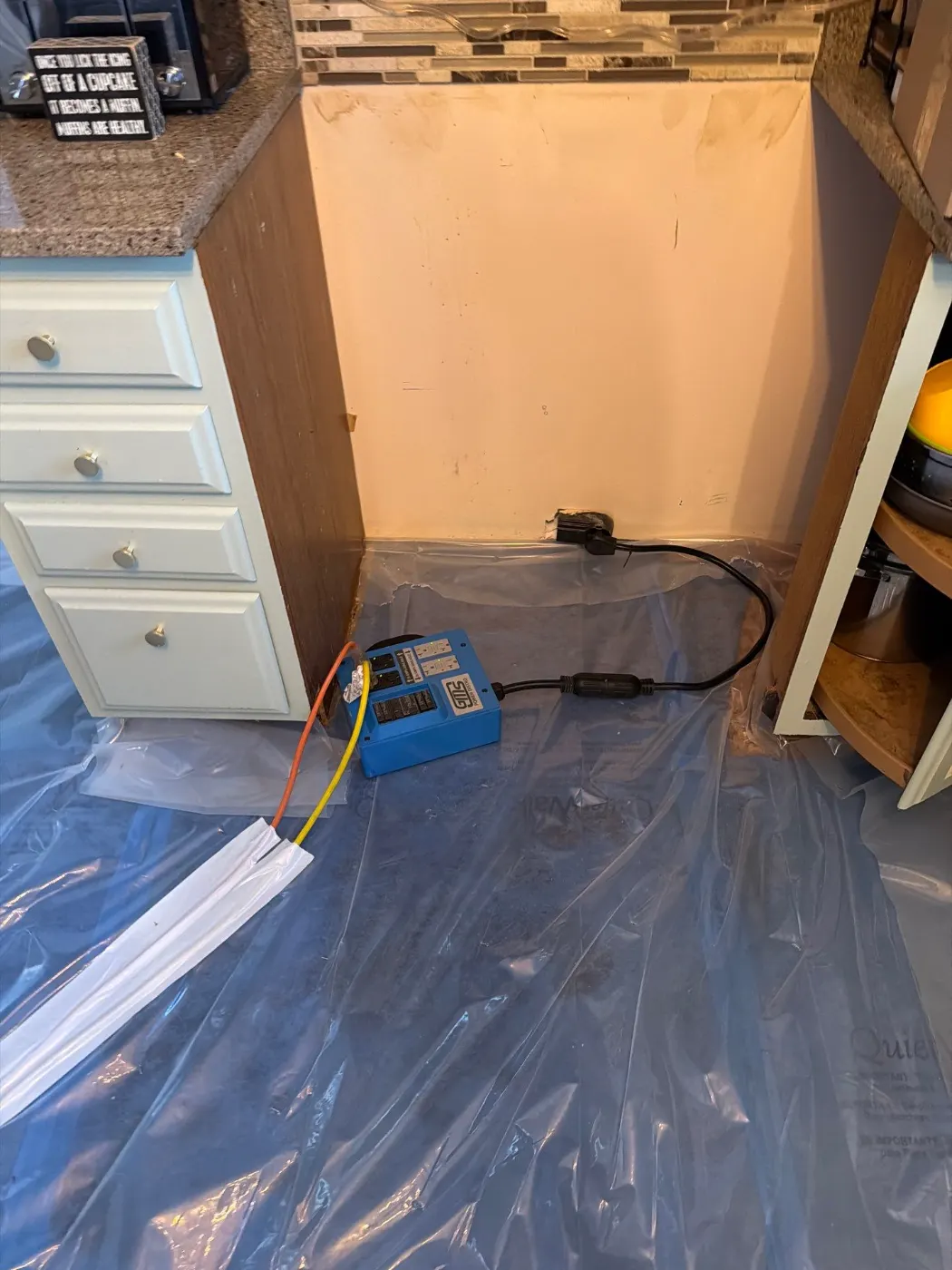
Commercial Mold Remediation in Station Hill, IN
Commercial mold work in Station Hill scoped from moisture readings, contained for occupied space, and documented for ownership.
Commercial Mold Remediation in Station Hill deserves a careful start: Station Hill Water Restoration schedules the assessment, maps the problem, and puts the plan in writing before anything else. Call (765) 676-3491 to schedule.
- Service: Commercial Mold Remediation for Station Hill homeowners
- Service area: Station Hill, IN and surrounding areas
- Response time: Prompt scheduling for Station Hill assessments, most booked within a day
- Licensed and insured (License #RC21100059)
- Serving Station Hill, IN since 2018
Commercial Mold Removal in Station Hill
We handle commercial mold removal throughout Station Hill, and we'll find the moisture source before the scope is written.
Moisture Sources Here
Buildings near White Lick Creek can take on floodwater, and anything left wet afterward can grow mold. We'll go over the air handling and any past leaks on the first walkthrough with whoever runs the building.
We take commercial mold jobs anywhere in Station Hill, including the streets around the Avon Station shopping area. We also handle commercial mold work in Woodcreek Crossing.
Commercial Mold Remediation for Station Hill Businesses
Property managers call Station Hill Water Restoration with a letter in hand more often than with a leak. A tenant has put the complaint in writing, the lease has a habitability clause somebody is now reading closely, and ownership wants to know the exposure before committing to anything. Finding out where the growth is and how far it runs is what answers that, and it takes an inspection and a moisture survey across the affected area in Station Hill, IN.
Aaron Christy founded the company behind Station Hill Water Restoration in 2018. Commercial mold work in Station Hill starts with measuring before anything gets removed. Crews map the moisture, remove only the assemblies the survey supports and record the reason for each one, and the owner gets a file that explains every square foot that came out of the building.
The scope decision on each assembly comes down to whether the material can be cleaned or has to come out. Porous materials with growth in them, saturated batt insulation, affected gypsum board and ceiling tile get removed and bagged inside containment. Nonporous framing, metal studs, concrete and structural steel get HEPA vacuumed and wiped down. Station Hill Water Restoration writes which category each assembly falls into so the building owner knows what's being removed and why.
Documentation that satisfies a carrier usually satisfies the other parties asking questions. Station Hill Water Restoration builds one file per project covering the moisture findings, the containment detail, the material removed, the drying verification and the source correction. Property managers forward it to ownership, lenders put it in a closing file, and tenants' representatives get an answer that doesn't require anyone's memory. The record you share with your carrier and the one you keep are the same document.
Before anyone paints over the stain or swaps the ceiling tile and moves on, call Station Hill Water Restoration. Covering the surface leaves the damp material and the water behind it in place. An inspection of your Station Hill property finds out what's under the finish before another coat or another tile goes up.
Signs You Need Commercial Mold Remediation
If you notice any of these in your Station Hill building, schedule a free inspection before the issue worsens.
Block or masonry walls in a mechanical room that stay damp to the touch
Staining on the underside of carpet or pad that shows when a seam lifts
Relative humidity in the space that stays high even with the mechanical equipment running normally
Window perimeter staining that darkens after driving rain and never dries out completely
A ceiling stain sitting directly beneath an upstairs restroom or break room
A leak behind a refrigerated case or ice machine that discolored the wall base
Cove base pulling away from the wall with dark residue on the back of it
Swollen base trim or gypsum board that's gone soft at the floor line in a restroom chase
Condensate dripping from an air handler or a chilled water line onto the mechanical closet floor
Tenant improvement work that stops because a contractor found dark staining inside a wall
How Station Hill Water Restoration Handles Commercial Mold Remediation
We follow these steps in order on every Station Hill job.
Inspection and Moisture Survey
Crews walk the affected area with thermal imaging and penetrating moisture meters, lift ceiling tiles where readings justify it, and open small inspection ports in wall assemblies. The survey defines the real boundary of the growth and identifies where the water is arriving from.
Phasing for Occupied Floors
Where part of the floor has to stay open, the work area is divided into zones that move in sequence. Each zone gets its own containment and readings before the barrier shifts to the next section.
Negative Pressure Setup
HEPA filtered negative air machines pull the work area to negative pressure relative to the surrounding building, exhausting outside where the layout allows. Manometers confirm the differential across the barrier. HEPA air scrubbers run inside the enclosure for particulate throughout the project.
HVAC Restart and Filter Change
After containment is down, the building engineer changes the filters on the affected air handler and restarts it with the registers unsealed. Any duct work flagged earlier goes to your HVAC contractor first.
Source Correction and Rebuild
The moisture source gets corrected or assigned in writing to the mechanical or roofing contractor responsible for it. Once drying readings hold, Station Hill Water Restoration rebuilds what came out: framing repairs, insulation, gypsum board, ceiling grid, flooring and finishes.
Commercial Mold Remediation in Station Hill
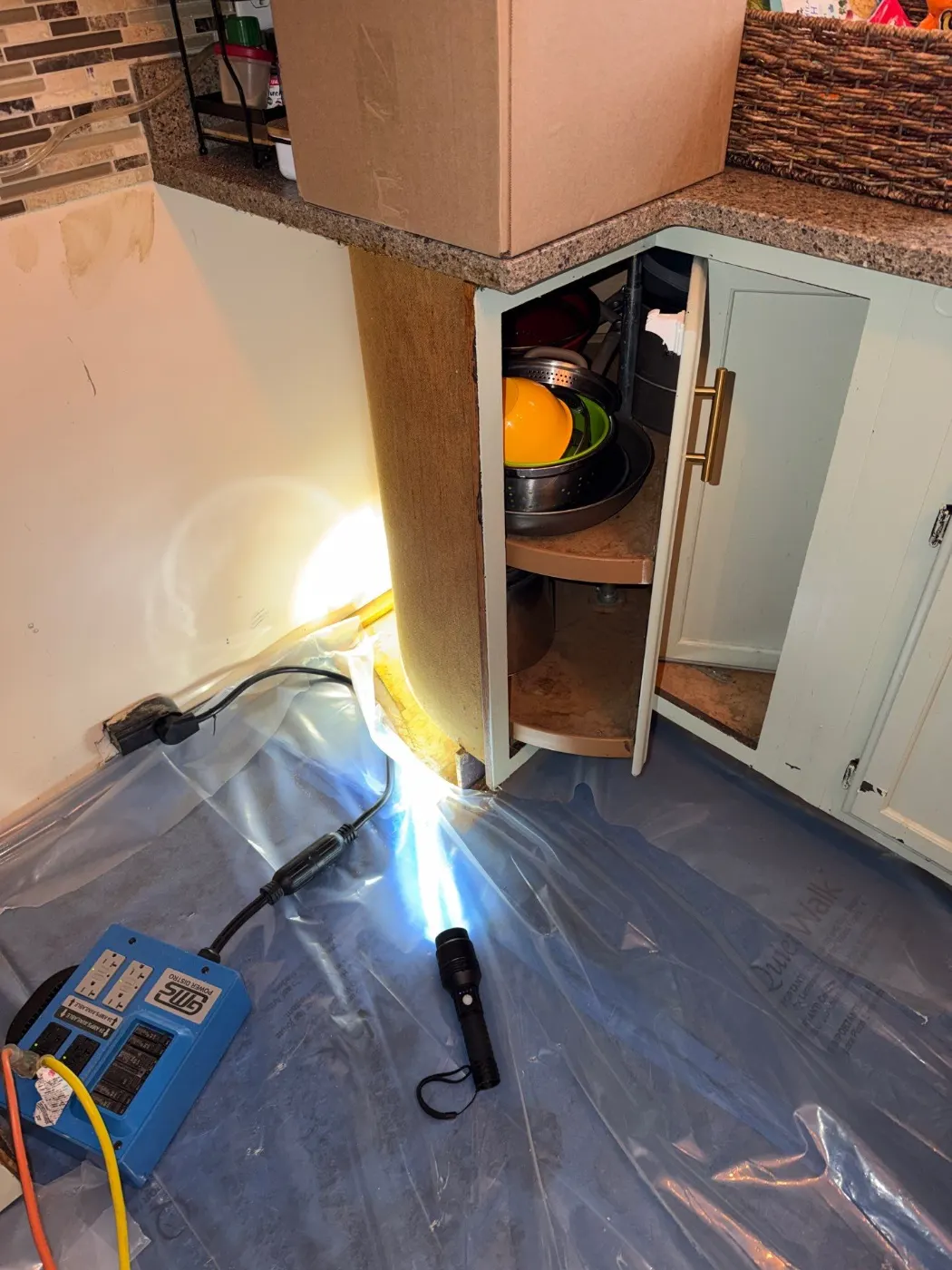
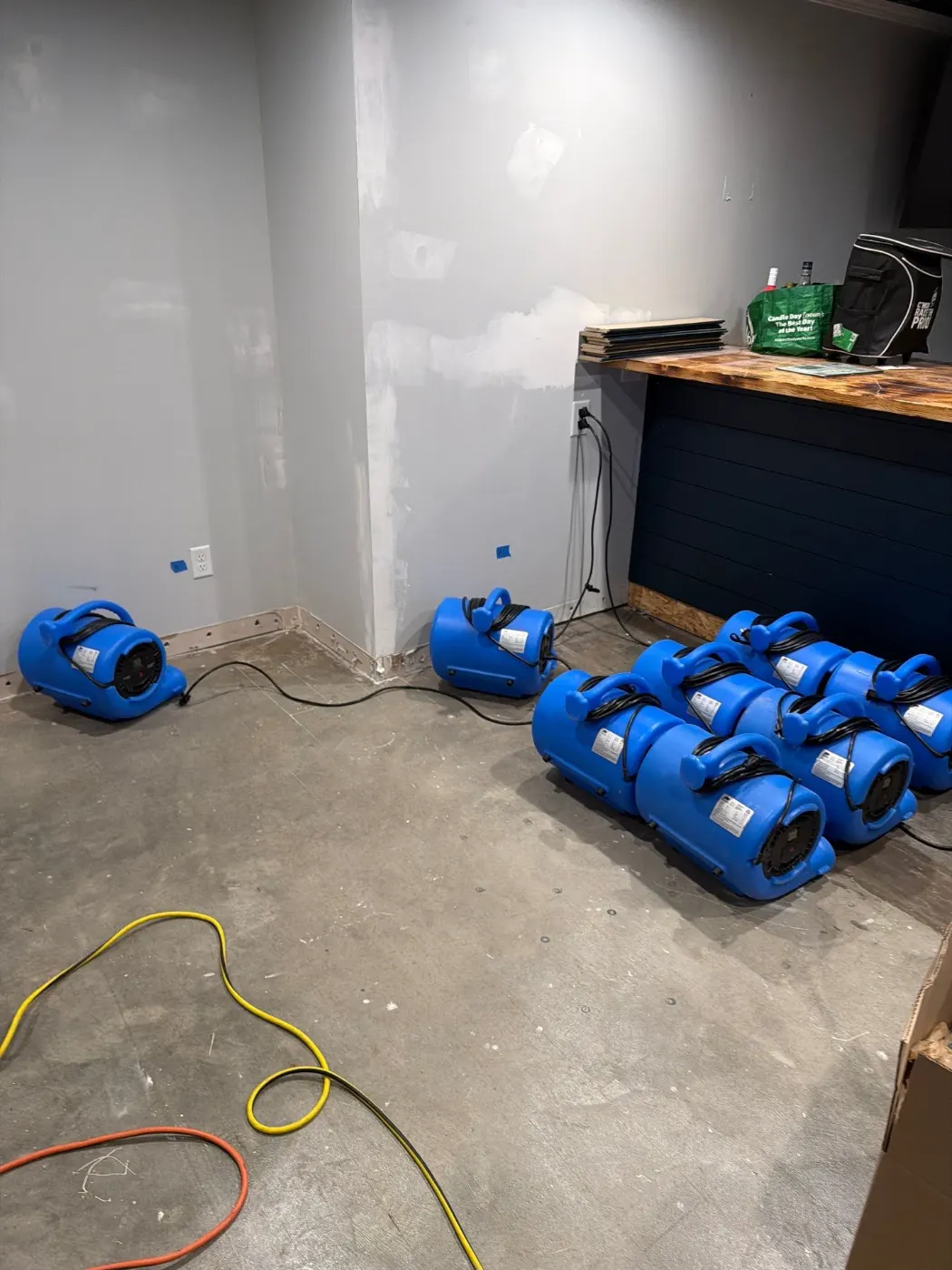
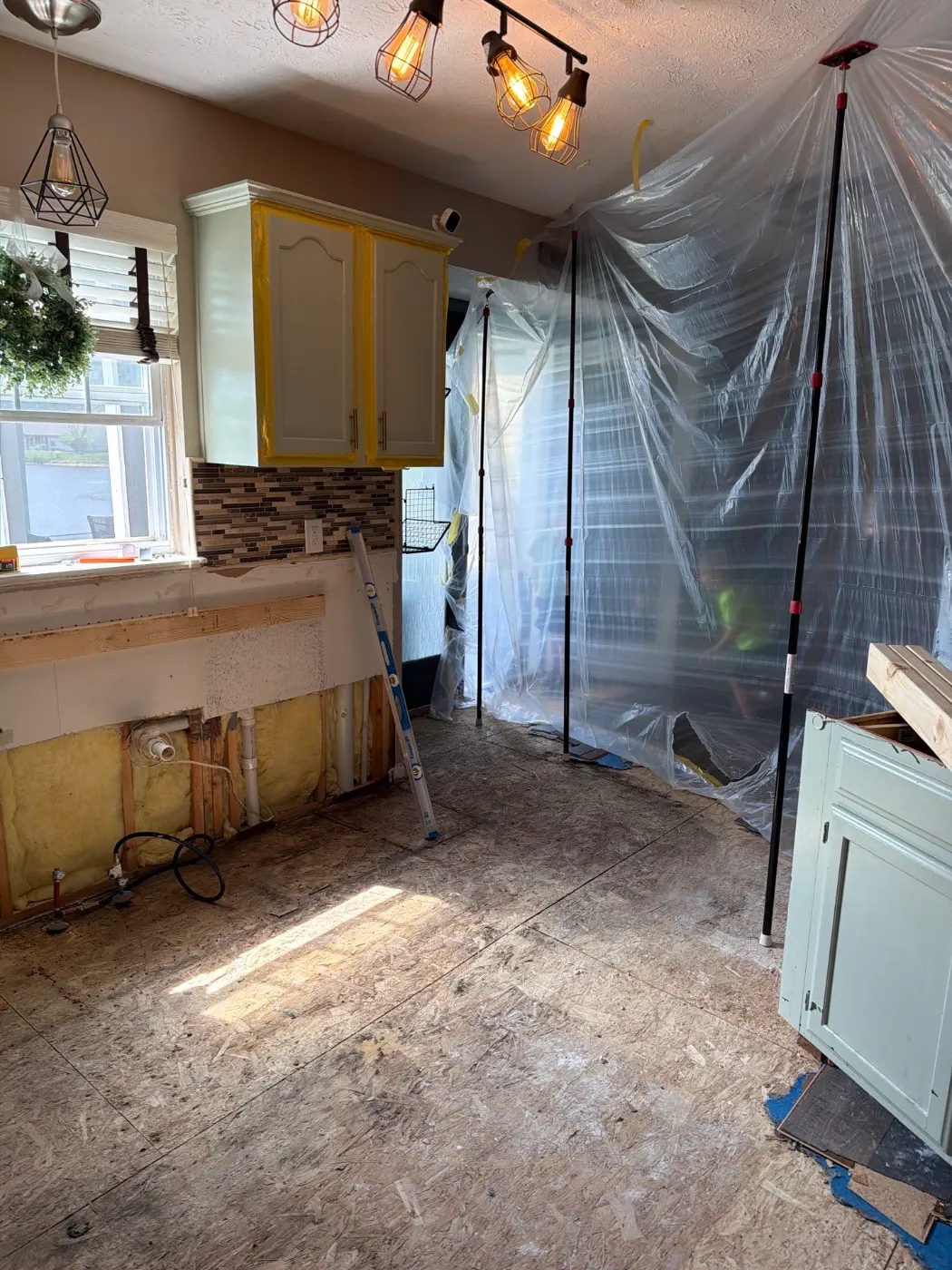
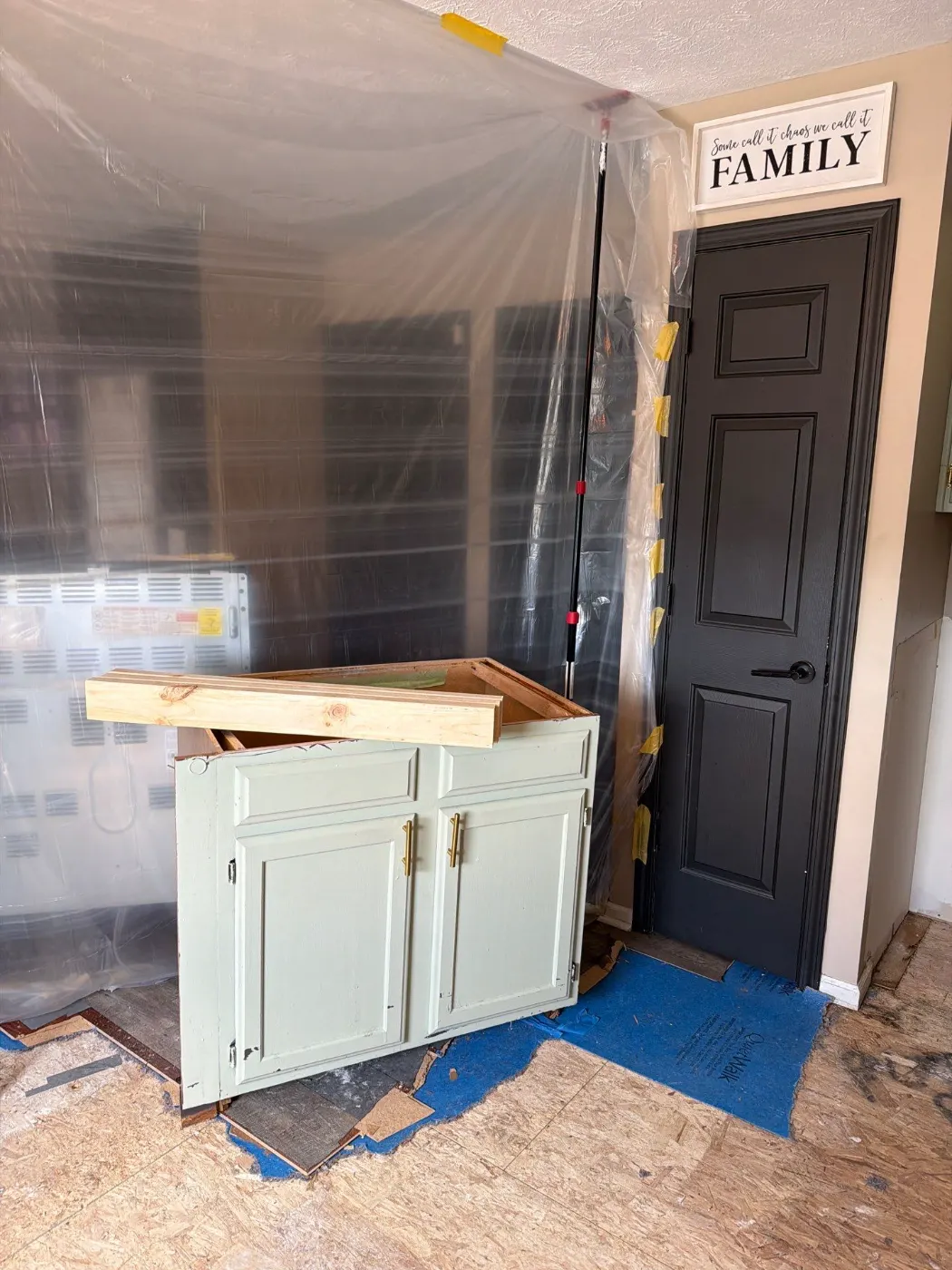
Photographs from real commercial mold remediation jobs completed by our crew in Station Hill and surrounding areas.
Commercial Mold Remediation FAQ
Questions Station Hill property managers ask us about commercial mold remediation.
Guidance and Standards for Commercial Mold Remediation
- The ANSI/IICRC S520 is the published standard for professional mold remediation. The current edition is the Fourth Edition, 2024. IICRC S520 Standard
- EPA’s mold guide says the key to mold control is moisture control. EPA: A Brief Guide to Mold, Moisture and Your Home
Station Hill Neighborhoods We Serve
We take commercial mold remediation calls in every part of Station Hill. Pick your neighborhood for local details.
Other Restoration Services in Station Hill
Station Hill Water Restoration handles the full scope of restoration work. Explore our other services below.
Water Damage Restoration in Station Hill
24/7 emergency response. IICRC certified water restoration from extraction to full dry out.
Learn more →Basement Flooding in Station Hill
Basement water emergencies handled fast. Extraction, drying, mold prevention.
Learn more →Sewage Cleanup in Station Hill
Category 3 biohazard cleanup. Full containment, decontamination, structural restoration.
Learn more →Request Commercial Mold Remediation
Reach Us Directly
Our team is available 24/7 for emergencies and ready to schedule inspections during business hours.
Need Immediate Help?
For active water or mold emergencies, call us directly. We are available 24/7.